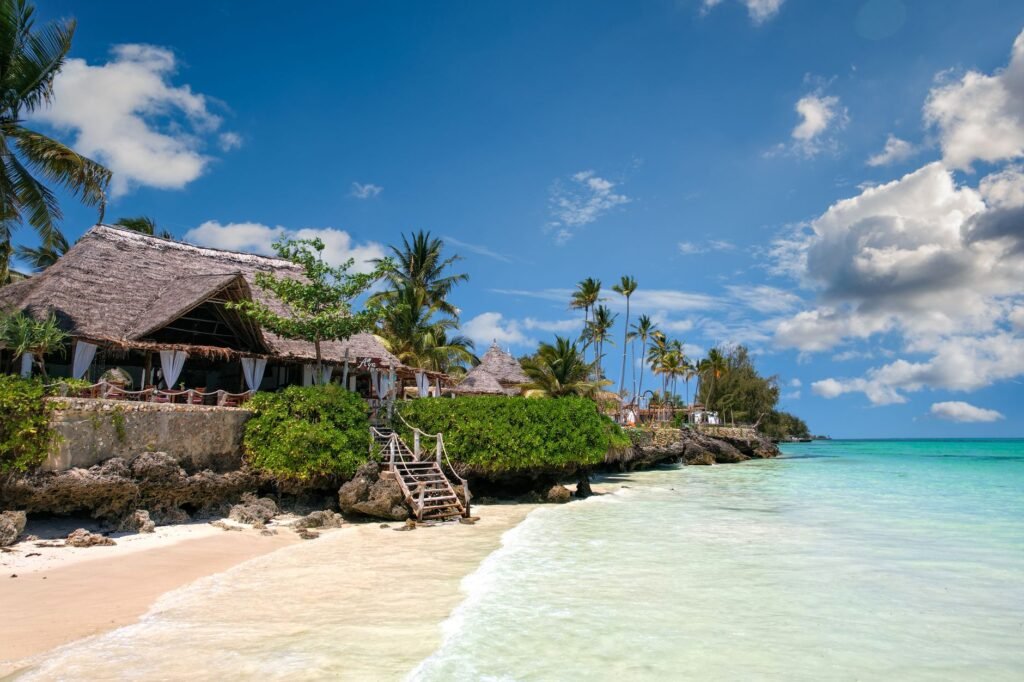
Zanzibar has quietly become one of the most searched beach destinations among American travelers — and for good reason. White coral-sand beaches, turquoise Indian Ocean water, and a rich Swahili culture make the island feel genuinely unlike anywhere else on earth. But booking a Zanzibar beach holiday from the USA comes with real questions: What does it actually cost? What's included in packages versus billed separately? When should you go? And how do you get there?
This guide answers every one of those questions with the specificity American travelers deserve — no vague estimates, no glossed-over logistics.
Zanzibar is a semi-autonomous archipelago within Tanzania, located about 25 miles off the East African coast in the Indian Ocean. The two main islands are Unguja (what most people mean when they say "Zanzibar") and Pemba (quieter, more remote, loved by divers). The capital, Stone Town, is a UNESCO World Heritage Site — a labyrinth of carved wooden doors, spice markets, and centuries-old mosques that tells the story of Swahili, Arab, Persian, and Portuguese trade routes.
Beyond Stone Town, the island's beaches are the main draw. Nungwi and Kendwa on the north coast offer calm, swimmable water year-round and the most vibrant nightlife. Paje and Jambiani on the southeast coast attract kitesurfers and travelers looking for a more relaxed, reef-fringed atmosphere.
What's changed in 2025–2026 is awareness. Zanzibar now routinely appears in major US travel publications, and direct or one-stop flight options have improved, making the destination far more accessible than it was five years ago.
Explore our full island offerings on our Zanzibar vacation packages page.
There are no nonstop flights from the United States to Zanzibar (ZNZ). Most American travelers route through one of several hubs:
Total journey time: Expect 18–26 hours door-to-door depending on your departure city and layover length. From New York, a typical itinerary runs around 18–20 hours. From Los Angeles, add 3–4 hours.
Flights from the USA to Zanzibar typically range from $900–$1,800 per person round-trip in 2026–2027, depending on departure city, booking lead time, travel class, and season. Economy fares during peak periods (December–January, June–July) skew toward the higher end of that range.
This is the section most travel sites skip — so let's be specific.
This tier includes 3–4 star guesthouses or boutique hotels, breakfast included, airport transfers, and basic excursions (Stone Town tour, spice farm visit). Flights are separate. Best for independent travelers or backpackers who want guided support without luxury markups.
This is the most popular tier for American couples and families. Expect 4-star beach resorts, half-board or full-board meal plans, airport transfers, curated excursion packages (snorkeling, dolphin tours, sunset dhow cruise), and concierge support. Some packages in this tier include a safari add-on — typically 2–3 nights in Serengeti or Tarangire before the beach component.
Top-tier Zanzibar means private villas, butler service, spa inclusions, private snorkeling and diving charters, and fine dining. Resorts like those on the north coast offer genuinely world-class hospitality at this level.
All-in budgets including flights from the USA:
Note: These are illustrative ranges based on 2025–2026 market data. Actual pricing varies by season, departure city, booking timing, and specific package configuration. Always request a detailed quote.
This is where most travelers get caught off guard. Here's an honest breakdown:
Always request an itemized inclusions list before paying any deposit. A reputable operator like Tanzania Classic Tours will provide this upfront.
US citizens do require a visa to enter Tanzania (which governs Zanzibar). The good news: the process is straightforward.
Yellow fever vaccination proof is required if you are arriving from a country with yellow fever risk. Consult your doctor and check the CDC and US State Department travel advisories for Tanzania before departure.
Zanzibar has two dry seasons and two rainy seasons. For American travelers, aligning the weather with US holiday schedules is the practical challenge.
US holiday tip: Thanksgiving week (late November) falls in the transitional period — weather is a gamble. Christmas and New Year's are prime season with premium pricing. Spring break (March–April) coincides with the heavy rainy season — generally not recommended.
This is one of the most underestimated planning factors for US travelers.
For combination safari + Zanzibar packages, add an additional month to each of the above timelines, as Serengeti lodge availability is the tighter constraint.
Best for travelers who want to arrive, unplug, and have everything handled. Meals, drinks (sometimes), activities, and transfers are pre-paid. The trade-off: less flexibility to explore independently. Worth it if you value predictable budgeting and minimal decision fatigue.
OTAs (online travel agencies) often offer these. Convenient for simple trips but limited in terms of local expertise, customized excursions, or responsive support if anything goes wrong. Not ideal for first-time visitors to East Africa.
This is what specialist operators like Tanzania Classic Tours offer. You choose your beach, accommodation tier, excursions, and duration. You can combine 3 nights in Stone Town, 5 nights on the north coast, and add a 2-night Serengeti safari pre-beach. These packages cost more than DIY but deliver significantly more value per dollar — especially for first-timers or travelers with specific interests (diving, history, honeymoon).
Extremely popular with US travelers. A typical structure: 5–7 days on safari in the Serengeti or Ngorongoro, followed by 5–7 days on Zanzibar's beaches. This is often called the "Tanzania Classic" itinerary for good reason. See our guide to Tanzania Honeymoon Safari Packages 2026-2027: Complete US Traveler's Guide for a detailed breakdown.
You can also explore day trip options with our Safari from Zanzibar Day Trip: 2026-2027 Buyer's Guide if you prefer to keep your beach base and add a wildlife excursion.
Zanzibar is generally considered safe for tourists, including American visitors, when standard travel precautions are followed. That said, here is honest, practical guidance:
Couples and honeymooners are the single largest US buyer group for Zanzibar packages. Expect romantic add-ons: private beach dinners, sunset dhow cruises, couples' spa treatments, and overwater or villa accommodations. Premium properties cater specifically to this market.
Families should focus on the calmer, north-coast beaches (Nungwi, Kendwa) where tidal changes are minimal and children can swim safely. Family packages often include kid-friendly activities like dolphin watching in Kizimkazi or spice farm tours. Confirm child pricing — many resorts offer significant discounts for children under 12.
Solo travelers benefit most from group tour structures or staying in boutique guesthouses in Stone Town, where the social atmosphere is more connected. Solo supplements apply at most resorts (typically 20–40% extra) — worth factoring into your budget.
For a destination as layered as Zanzibar — with ferry logistics, tide-dependent beach choices, cultural nuances, and safari add-ons — working with a specialist operator who knows Tanzania firsthand makes a meaningful difference. Tanzania Classic Tours works exclusively in Tanzania, which means we know which beaches suit which travelers, which lodges deliver on their promises, and how to handle the unexpected when you're 9,000 miles from home.
Read more about our approach on our About Us page, explore all available Destinations, or go directly to our Zanzibar packages to start planning.
For a personalized quote tailored to your travel dates, group size, and budget, visit our Contacts page. We respond to all US inquiries within 24 hours.
Zanzibar is genuinely worth the journey. With the right package, the right timing, and a knowledgeable operator behind you, it delivers the kind of trip Americans talk about for years.